
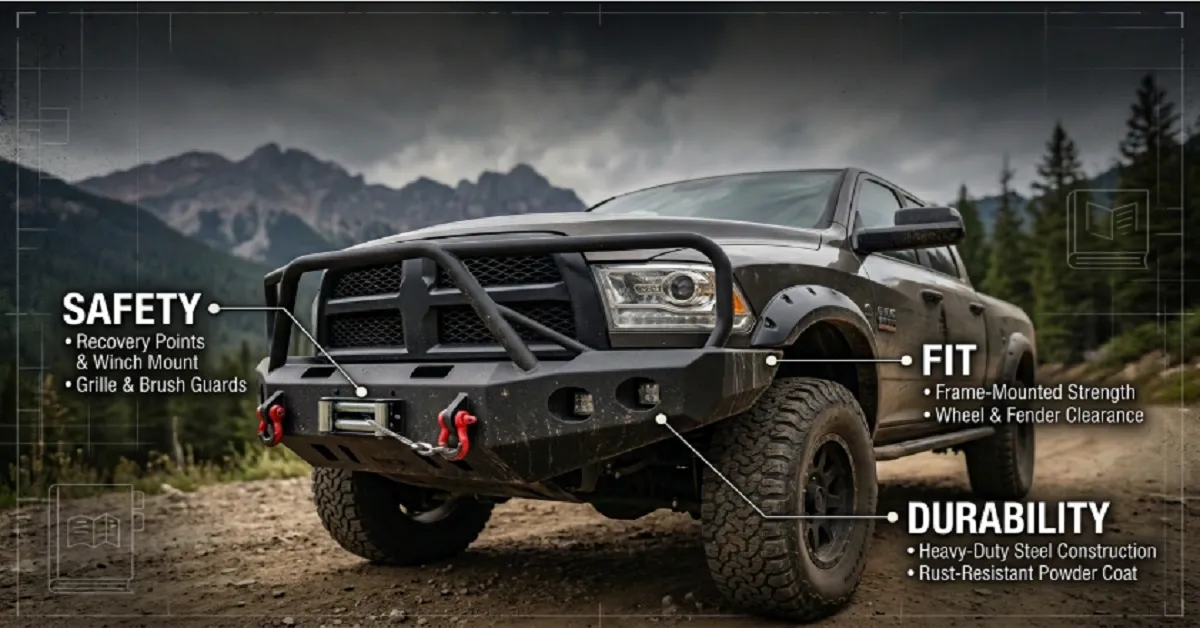
A truck bumper is a multifunctional tool. It can protect the specified parts from unsystematic impacts, provide mounts for accessories, and even simplify various operations on work trucks. Nevertheless, there are differences between the bumpers in terms of functionality. A wrong choice leads to reduced efficiency or even improper functioning of critical elements of the vehicle. The key bumper types, materials, and installation rules must be known to avoid errors.
First of all, it is essential to understand what requirements should be met when selecting a new bumper. Fortunately, the company Loewen 1776 Trailers & Truck Bodies offers a wide range of products to learn the main principles. By comparing the characteristics of various bumpers with the truck’s geometry and intended use, it will be possible to identify the critical factors.
1. Understand What Your Truck Needs
A standard replacement bumper, heavy-duty equipment, or a specialized off-road protection the choice ultimately depends on the vehicle’s intended use. Obviously, a passenger car used only on highways has different requirements than a work truck employed on a construction site or a farming plot.
As a result, it is necessary to answer several vital questions:
- Do I drive on a highway or off-road?
- Do I need to mount any equipment on the bumper?
- Is the truck used for commercial purposes?
- Do I want to upgrade my current bumper or do I need to replace the broken one?
For example, if the vehicle is used for everyday driving, a standard bumper will provide the required functionality. Nonetheless, if the truck is employed for commercial purposes, extra precautions must be taken when selecting a bumper. An off-road bumper is a great option for adventurous drivers who like to explore remote places.
- Learn the Essential Differences Between Them
Truck bumpers can be generally divided into several categories based on their intended use.
Replacement Bumpers
They represent the most common type as they are used to replace a standard bumper. Obviously, the vehicle’s make, model, year, and other characteristics must be taken into account when choosing a replacement bumper. It must also match the existing mounting points and have the necessary openings for sensors.
Heavy-Duty Bumpers
They are usually installed on trucks that are engaged in heavy lifting or other resource-intensive tasks. Heavy-duty bumpers may also have various mounts for different accessories.
Nevertheless, such bumpers are not always better as extra weight can affect the vehicle’s performance. When selecting this type of bumpers, it is essential to learn if the additional equipment will not overload the truck or worsen its handling characteristics.
Off-road Bumpers
This type is intended for vehicles used on rough terrains. Such bumpers usually have a larger angle of attack to help the truck get over obstacles. Some of them have special mounts for auxiliary lights or winches.
However, they must be mounted correctly so that the additional equipment is properly connected to the vehicle’s electrical circuit. In addition, recall that the bumper’s shape and construction cannot guarantee the recovery rating, so it is essential to choose only reliable and high-quality components.
- Compare the Most Common Materials
The material of the bumper is directly related to its weight, resistance to corrosion, and other performance characteristics.
Steel Bumpers
They are the popular choice among truck owners due to their versatility and reliability. They are relatively light and have multiple mounts.
Nevertheless, steel bumpers require special maintenance to prevent rusting. If the coating is broken, the entire bumper should be inspected to remove all the affected spots. In addition, regular inspection helps to identify potential issues before they become critical.
Aluminum Bumpers
Compared to steel counterparts, aluminum bumpers are much lighter. The reduced weight is beneficial for all types of vehicles, especially when they are equipped with auxiliary equipment. In addition, aluminum has a higher resistance to corrosion.
Nevertheless, aluminum and steel have different mechanical properties, so a direct comparison is impossible. The performance of bumpers made of different materials depends on many factors, including their design.
Plastic Bumpers
Most of the plastic bumpers are actually composite ones as most of the manufacturers try to ensure a certain balance between weight and performance. They have a decent lifespan and resist corrosion, so they can be used in various environments.
Plastic bumpers are usually suitable for everyday driving as long as the location and the design of the bumper match the traffic regulations. If the bumper has to replace a damaged one, it is essential to ensure that the mounting points and other vital characteristics are also compatible.
- Check the Fitment Beforehand
The size and shape are essential characteristics that must be considered when choosing a bumper. Obviously, it would be a mistake to order a bumper without checking the fitment specifications. Therefore, it is necessary to ensure that the chosen bumper is compatible with the following parameters:
- The vehicle’s characteristics: make, model, year, and trim.
- Mounting details: the location and design of all the necessary brackets.
- The bumper’s dimensions: width, height, and other characteristics.
- Sensor’s location: the presence of special openings for cameras and other sensors.
- Lights: their location, color, and mounting scheme.
- Auxiliary equipment: the presence of mounts and other details.
It is also worth noting that some models of the same year may have different bumper designs. In this case, refer to the owner’s manual or the manufacturer’s website. Recall that it is not recommended to alter the vehicle’s mounting points to ensure that the bumper fits.
- Pay Attention to Safety Regulations
The bumper must be mounted in such a way that it does not interfere with the operation of the vehicle’s sensors. Most modern cars have different driver-assistance systems that require special attention. If the bumper does not match the required specifications, it may block the sensors or prevent them from operating correctly. It is essential to check if the bumper requires the reinstallation or adjustment of the sensors.
It is also vital to consider the local regulations concerning the bumper’s height, lights, license plates, and other characteristics. The requirements vary depending on the region and the type of vehicle. In addition, if the bumper has special mounts for recovery gear or a hitch receiver, it is crucial to check their rating. The performance of all the components in one chain is only as good as its weakest link.
- Study the Bumper and Hardware Before Installing
The vehicle’s and bumper’s mounting points must be checked for proper fitment. In addition, the bumper should not have any damage to its body, fittings, or welds. A visual inspection is mandatory to ensure that there are no signs of rot or other issues. In addition, it is necessary to ensure that the hardware does not damage the vehicle’s body. Obviously, the hardware must match the torque specifications indicated by the manufacturer. Do not use broken or deformed bolts, and never replace them with unknown ones.
If the truck has been in an accident, the bumper mounting points must be examined carefully. Remember that the frame and other structures may also be damaged. In this case, it is better to contact a professional service for a complete inspection.
- Take Care of the Bumper
The frequency of maintenance depends on the material of the bumper, the conditions of its use, and other factors. Nevertheless, it is recommended to follow these general recommendations:
Monthly or as part of the vehicle’s maintenance: check loose or damaged hardware; inspect the body of the bumper for cracks; clean the bumper from dirt, road salt, and other contaminants; check the integrity of the coating and other vulnerable spots. After heavy duty use or traveling on rough terrain: inspect the bumper for damage; check the integrity of all the mounts; examine the location of the bumper relative to other parts of the vehicle.
If damaged, contact a professional service for an inspection. A qualified employee will be able to identify the damage and recommend the necessary measures. It is also vital to restore the coating if the bumper’s material needs it. After that, the maintenance schedule can be adjusted according to the needs and requirements of the selected material.
Conclusion
To summarize, the choice of a truck bumper depends on the vehicle itself, its intended use, and the required level of protection and functionality. The material, weight, fitment, and safety features are also vital. It is essential to study the characteristics of the future bumper and the vehicle before purchasing or installing it. In addition, regular maintenance and periodic inspections are beneficial as they can prevent future problems.