
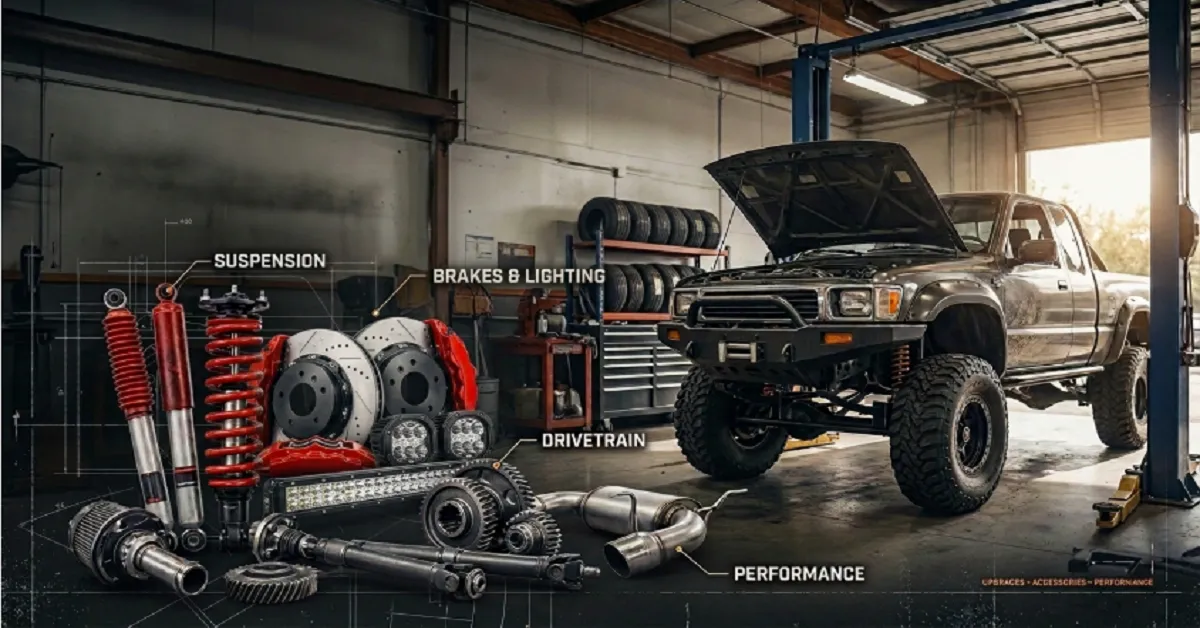
Work trucks can handle all manner of tasks, from hauling supplies to heading out onto rugged terrain. However, there are many components for a work truck that might require regular fixing or changing as the vehicle gets used up. There is always a possibility of buying the wrong spare, resulting in extra expenditures, low quality, and additional hassle during installation. It becomes necessary for a person to determine a bit about the use, condition, and nature of each element in use for a safe and secure vehicle.
While looking for alternatives and spares for truck accessories and mounts and replacement parts for broken brackets, users might find themselves a bit lost in the options. In this guide users, however, can learn about such components and their importance in ensuring the wellbeing of their work-trucks. The FRDM Fabs parts directory presents work truck accessories, mounts, brackets and other equipment parts, serving as an example of some of the tools found in the industry. With this as the basis, it should be easier for a user to know what the necessity and the use is in the selection process as well.
1. Know the Problem Before Replacing a Part
The most common occurrence when purchasing a new part is that the buyer might end up with the wrong fit. One should first determine what the necessity is for a new component and purchase it according to the needs of the truck.
Firstly inspect the damaged or faulty mount or bracket and note any loose, crack, or break. The following must be noted:
- What is the faulty item or missing part?
- Has the damage been gradual or spontaneous?
- Has the damage been a result of use from other components?
For example, loose toolbox mounts can be due to several conditions, ranging from loose fasteners, toolbox mounts that have suffered some damage, and the incorrect toolbox placement. One might conclude that fastening tools might suffice; in the case of toolbox mounting structure that has seen better days, it would not do.
When the fault or damage is in one of the truck’s main parts like the steering, brakes, or suspension, one must get their vehicle diagnosed by a qualified mechanic before proceeding.
- Cross Check Compatibility with Your Truck Model
There are several instances when users have purchased the wrong mounting bracket for their truck, resulting in more harm and high price replacements. While the two trucks in one design might be similar, it is still important to consider that their respective components might have different needs. Before purchasing a bracket or mount, cross check it against:
- The make and model – note specifics relating the brand the truck belongs to.
- Year of manufacturing – slight differences, especially in truck accessory mounting, can occur after certain years.
- Configuration – the truck cab, bed, or other equipment might have different mounting necessities.
- Accessories – when the truck is equipped with a variety of accessories, it might limit the space required for mounting or use of alternative equipment.
- Part number – when buying replacement spare parts for faulty or broken hardware and mounting tools, make sure to note the number provided by the manufacturer.
- The size when necessary – when mounting hardware requires a bit more flexibility in the space, one may find it beneficial to write down the necessary distance between mount holes and other measurements.
Compatibility issues usually arise when the user only looks at the appearance of the part or the name. When uncertain about mounting compatibility, users may compare it with similar mounting accessories or consult a trusted seller.
- Get Familiar with Common Components
There are several parts of a work truck that serve specialized functions. Here are a few aspects to consider before purchasing alternative or replacement parts for them:
Mounting Brackets
These are used for holding items and components in place, and transferring its loads towards the structure or frame of the truck. Mounting brackets can be secured as additional equipment on the work truck. Each type has unique uses and features, and can be purchased separately or included with the accessory or item that a user intends to secure.
Brackets should match the item being secured such as a toolbox or another storage device being secured. When considering buying a new bracket, one must examine the size, mounting specification, material, and recommended applications.
Fasteners and Hardware
These components are used for tightening and securing items and their mounts using washers or other hardware. There are varieties in the sizes, strength, and uses. When purchasing hardware, consider items recommended by the manufacturer and look for the proper fastener. It might cause more harm than help when attempting to use a screw that does not have the correct threading.
Mounting Accessories
Accessories are generally attached using mounting accessories. There are a variety that cater to specific equipment and can generally only be used for it. When looking for a new accessory for a work-truck, one must ensure that its specific mounts are bought with it. However, when a user intends to modify the existing mounting or attachments, it should be made clear beforehand that the equipment was not meant for it.
- Decide on the Materials and Quality
Generally, hardware and equipment such as truck mounting accessories for work trucks are subjected to environmental conditions and mechanical stressors such as temperature changes and constant vibration. The material used to shape and construct each piece of equipment will generally dictate the amount of maintenance and control that will be required.
Steel, when used in the bracket or accessories that support a wide variety of equipment and load bearing necessities for work trucks, is extremely common and often recommended. Such brackets, when left improperly designed or maintained however, risk corrosion from environmental factors such as humidity.
Aluminum, when fabricated or produced using certain alloy metals can also offer good bracket or accessory quality, in terms of being light weight and resisting certain external factors. Aluminum mounting, again, depends on the equipment or load as well as the manufacturing process. While each metal has benefits and drawbacks, a user should always consider all aspects of the component and its recommended use before purchasing.
- See What Kind of Load it is Supposed to Bear
Accessories such as toolboxes, fuel tanks, and additional storage compartments or equipment will add weight to the truck. Purchasing alternative mounting accessories or mounts may result in the wrong amount of load or tension being distributed to each part of the frame of the truck. Before mounting large or cumbersome equipment, one should consider the overall weight and load bearing capability of each component. The overall weight of the truck should be measured with a safe amount of additional weight such as the passengers, cargo, and equipment.
It becomes necessary for users to keep the added weight within the specified limit of the vehicle’s bearing structure. While the overall distribution should fall below this weight, users should also bear in mind that improper distribution will also put a strain on other mechanical parts such as tires. Some of this advice can overlap between items but generally should be followed for safety and vehicle wellbeing.
- Always Install Parts Correctly
Even with the correct replacement part, there is always a chance that one might install it incorrectly. In such a case, it will be necessary to purchase the right installation tools or take the truck to an authorized dealer and pay additional costs. Before doing this, there are a few things the user should do to confirm the suitability of the new part. Firstly compare the new bracket, for this example, with the faulty or broken one in the truck. This should be done when the vehicle is accessible so that the user can confirm the pattern of the hole in each.
When performing the installation, keep these tips in mind:
- Secure equipment or components before attempting to remove any mounting parts.
- Use the recommended size of fasteners and follow their tightening specification.
- Do not force in any part or attempt to twist or twist any component into place.
- Avoid damage to other surrounding equipment or components.
- When the instructions call for it, only alter the truck’s structure as described.
Do not guess the torque or over-tighten the specified fasteners since both can cause damage to the components. If installation is going to require structural support, alterations, or any sort of modifications, users should call on certified and licensed mechanics.
- Conduct Routine Maintenance
Simple visual inspection and monitoring activities help a person stay in top condition. The same procedures can be followed to look for defects and faults in the trucks mounting accessories or component parts as well. Depending on the intensity of a vehicle’s use or exposure, such maintenance schedules must be followed according to the manufacturers guidelines or instructions.
When the truck has been used in conditions of mud, rain, and high temperature, make sure to clean the exposed hardware and any parts of accessory mounts or brackets. When a person notices signs of rust, exposed hardware, looseness, bend, and damage cracks, or shifts in the vehicles parts, it is generally advised to conduct regular checks. Users should replace broken or damaged parts as it might be dangerous to re-purpose or patch the existing part instead, unless instructed to do so by the manufacturer.
For commercial use vehicles, regular maintenance schedules should also be followed so that these replacement part guidelines are kept in check.
Conclusion
It becomes necessary for a truck owner or professional to know just what they are looking for before purchasing vehicle accessories and mounting spares. Each part from mounting brackets, fasteners, or mounting accessories needs to support the intended purpose. When purchasing, users should look for compatibility checks and guidelines and the recommendation of each component. Regular maintenance allows for a higher level of security and control that can help maintain a professional truck for long term and consistent use.