
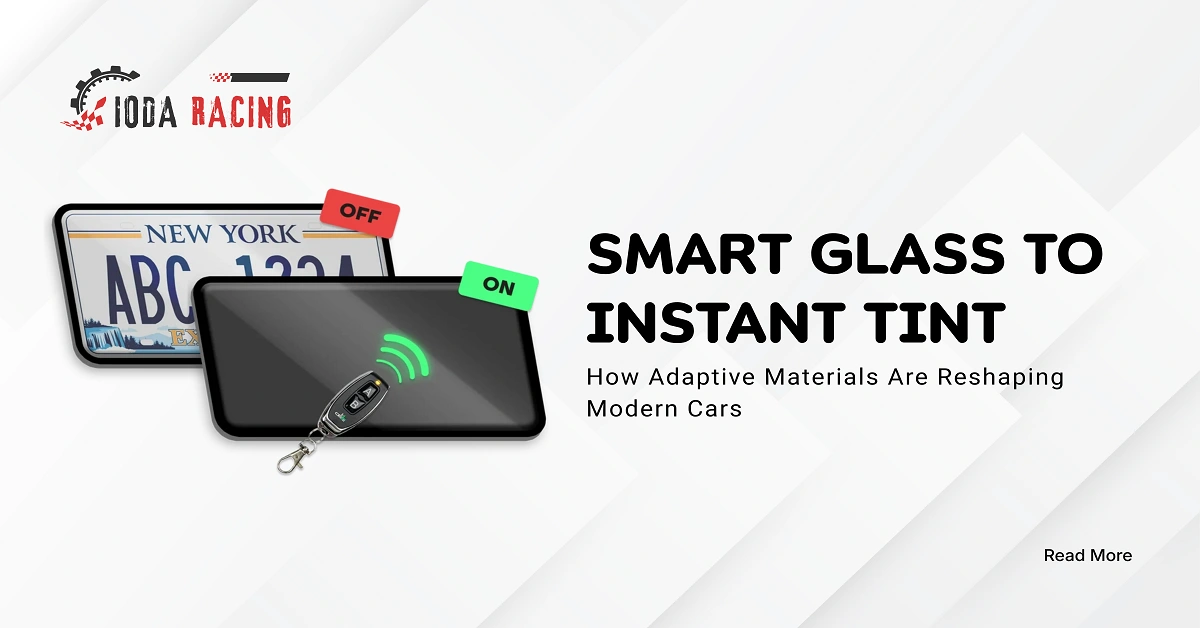
For decades, the exterior components of a vehicle were purely static—designed to hold their shape, resist corrosion, and look the same from the factory floor to the end of their lifespan. Today, advances in optical engineering and smart polymers are allowing everyday automotive accessories to manage light and visibility on demand.
This shift is especially noticeable among car collectors, automotive photographers, and motorsport enthusiasts. An electronic blackout license plate cover from Alite Hub, for example, illustrates how instant optical shielding can conceal registration details during private car shows, track days, or photo shoots without relying on bulky mechanical shutters. Because public roads strictly require unobstructed plate visibility, these devices are designed exclusively for off-road, stationary display, or private property use in compliance with local traffic laws.
How Light-Blocking and Tint Technologies Work
Standard tinted covers rely on fixed pigments or dyed plastics that permanently reduce the amount of light passing through them. While effective at cutting glare, fixed tints cannot adapt when conditions or legal requirements change.
Switchable optical covers operate differently. By integrating an active internal layer between rigid transparent plates, the surface can shift between a clear, high-transmission state and a darkened, opaque state within fractions of a second. When activated, the internal structure either scatters incoming light rays in multiple directions or absorbs specific wavelengths, preventing anything behind the cover from being read.
Core Layers Behind Instant Opacity Control
Several engineering components work together to make a reliable switchable cover function smoothly:
-
Polymer-Dispersed Liquid Crystal (PDLC) films: Microscopic liquid crystal droplets suspended in a polymer matrix align when an electrical current is applied, turning a frosted or dark barrier completely transparent.
-
Suspended particle devices (SPDs): Light-absorbing nanoparticles suspended in a fluid film adjust their orientation under voltage, allowing precise control over darkness levels.
-
UV-stabilized polycarbonate shells: High-impact outer lenses protect the sensitive optical layer from road debris, ultraviolet yellowing, and scratches.
-
Hermetic edge seals: Moisture-resistant barriers prevent water vapor and dust from delaminating the internal conductive coatings.
Engineers balance these elements based on switching speed, optical clarity in the transparent state, and power efficiency. A well-built cover must appear virtually indistinguishable from clear protective acrylic when deactivated or switched to its transparent mode.
Built to Withstand Harsh Exterior Conditions
Moving optical technology from indoor electronics to the front or rear bumper of a car introduces serious durability challenges. Exterior accessories endure freezing winter temperatures, intense summer heat, high-pressure car washes, and constant road vibration.
Early generations of switchable films often suffered from slow response times in cold weather or gradual fading under prolonged sunlight. Modern designs address these weaknesses with automotive-grade adhesives, wide-temperature liquid crystal formulations, and low-voltage wiring harnesses that integrate cleanly with a vehicle’s auxiliary power system.
Privacy, Display Use, and Legal Boundaries
Beyond visual appeal at automotive exhibitions, controlled opacity offers practical benefits for content creators and vehicle owners. Photographers filming promotional videos or owners sharing build updates online often spend hours digitally blurring plate numbers in post-production. Using a blackout license plate cover while parked at a venue eliminates that editing step while keeping the vehicle’s profile clean.
At the same time, responsible operation remains critical. Motor vehicle regulations in nearly every jurisdiction mandate that license plates remain fully legible and free of darkening covers whenever a vehicle is driven on public streets. Manufacturers and drivers alike must treat switchable opacity strictly as a stationary, off-road, or show-car feature.
Looking Ahead at Adaptive Auto Trim
As manufacturing processes mature, switchable optical layers are becoming thinner, clearer, and more affordable to produce. Beyond license plate protection, similar technologies are already expanding into panoramic sunroofs, glare-reducing side mirrors, and adaptive accent trim.
The broader takeaway for automotive design is clear: exterior surfaces no longer need to be permanently fixed in appearance. With thoughtful material engineering, vehicle accessories can deliver instant privacy and visual customization while preserving clean, factory-style aesthetics. For more information, click here.